
Professor Dr. Dietrich Harth – erster Preisträger der Ferdinand-Blumentritt-Medaille und Autor der umfangreichen Rizal-Biografie „José Rizals Kampf um Leben und Tod“ – hat für die Österreichisch-Philippinische Gesellschaft eine „Rezension zum Buch „Von Marcos zu Marcos“ verfasst. Wir bedanken uns sehr herzlich dafür!
Des Weiteren verfasste er einen Bericht/Kommentar über den Auftritt der Philippinen auf der Frankfurter Buchmesse:
„The Philippines at the 2025 Frankfurt Book Fair: A party in the spirit of José Rizal“:
Schließlich dürfen wir noch auf ein Werk von Ferdinand Blumentritt verweisen, das nun in einer englischsprachigen Übersetzung vorliegt. Besonders eindrucksvoll in diesem Buch sind die vielen visualisierten mythologischen Figuren:
DICTIONARY OF PHIPPINE MYTHOLOGY
Diccionario mitológico de Filipinas
Third Edition, 2024
Blumentritt, Ferdinand
Dictionary of Philippine mythology = Diccionario mitológico de Filipinas / written by Ferdinand Blumentritt; translated by Jaime Marco Marquez; edited by Leslie Gil. – Third Edition. – Quezon City; Vibal Foundatuib, Inc. [2024], c2024.
168 pages; cm – (Filipiniana Classica)
ISBN 978-971-97-0951-0 (hardbound)
ISBN 978-971-97-0855-1 (softbound)
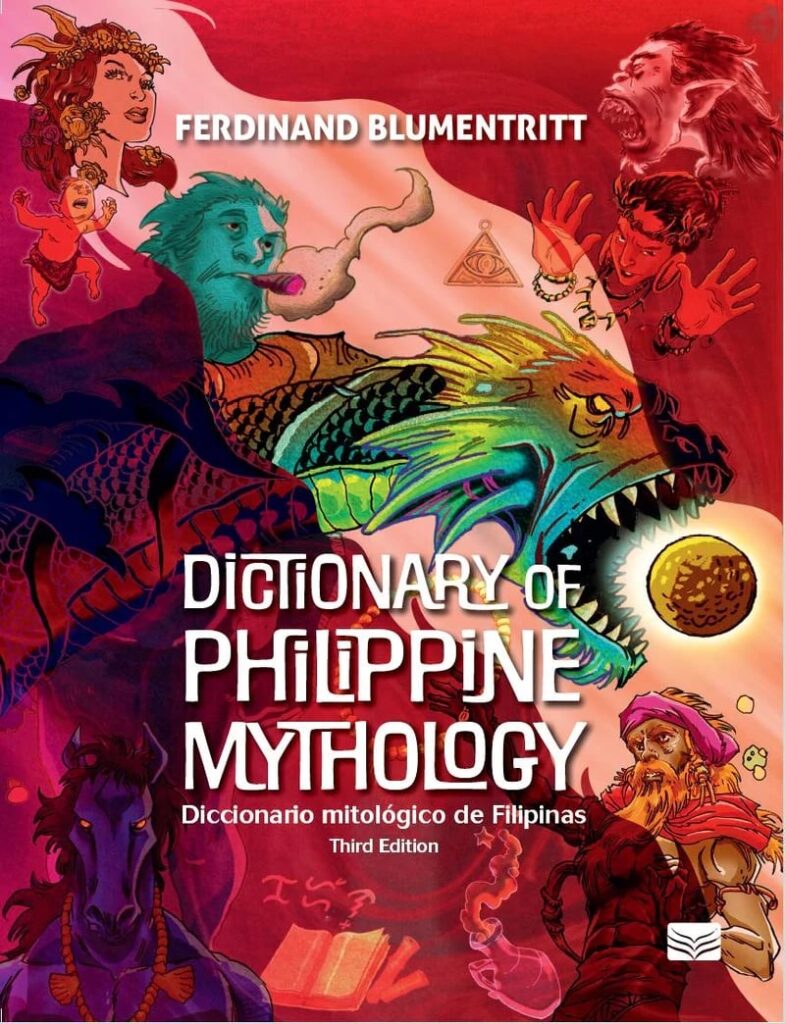
Ferdinand Blumentritt’s Dictionary of Philippine Mythology is a landmark work that paved the way for the scholarly exploration of the mythological traditions of the Philippines. Originally published as Diccionario mitológico de Filipinas in 1895, this English-translated edition brings new life to one of the earliest and most comprehensive studies of the deities, spirits, and supernatural beings that inhabit the belief systems of the archipelago’s diverse ethnolinguistic groups.
A close confidant of José Rizal, Blumentritt approached Philippine mythology with the precision and depth of an anthropologist. The entries are carefully annotated, with sources ranging from ancient Spanish chronicles to Jesuit letters, offering differing perspectives on the other faces of Philippine culture that existed before the Spanish colonial grip was established. Blumentritt’s methodical work not only documents the gods and rituals of the indigenous peoples but also compares them with mythologies from Southeast Asia, Africa, Europe, and the Americas, making this dictionary a rich, cross-cultural study of animist traditions.
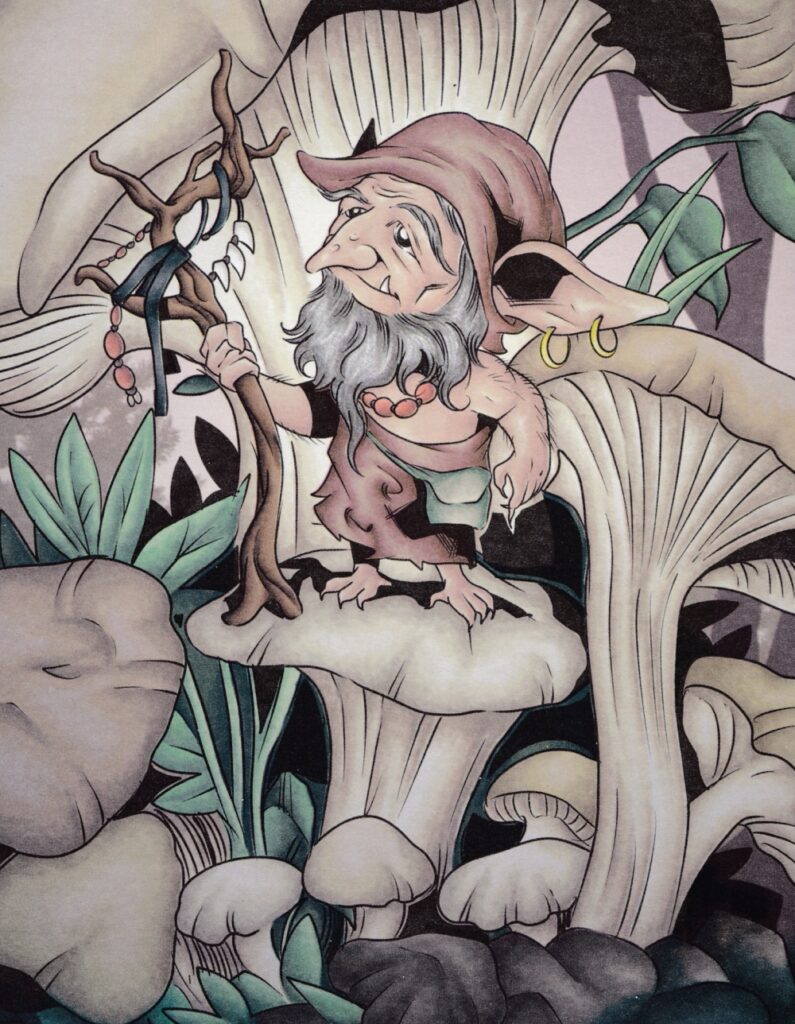
This edition preserves Blumentritt’s original insights, making it accessible to modern readers while enriching the experience with vivid illustrations of select creatures in Philippine mythology. More than a reference book, Dictionary of Philippine Mythology is an exploration of the world of ancient Filipinos, where the gods command the forces of nature, ancestral spirits guide mortals, and ancient rituals hold the power to alter fate.
“Vibal Foundation’s Dictionary of Philippine Mythology, in its bilingual and illustrated format, brings vividly to life Ferdinand Blumentritt’s definitions of deities, mythical creatures, and ancestral spirits, among others, illuminating the diverse worldviews of various Filipino ethnic groups. Blumentritt’s meticulous research not only preserves these vital narratives in the face of colonial influences but also serves as a foundation for understanding Filipino identity and nationalism.
This dictionary, which celebrates the enduring legacy of Philippine mythology and folklore, is an invaluable resource that both scholars and enthusiasts must read. By looking back at the past, we can better appreciate what we have in the present.“
Anthony John R. Balisi
Director, National Book Development Board

“Initially serialized in numerous issues of La Solidaridad starting in 1893, Diccionario mitológico de Filipinas (Dictionary of Philippine Mythology) was compiled by Professor Ferdinand Blumentritt and was subsequently corrected, appended, and published as a book for its second edition in 1895.
Translated to English here as Dictionary of Philippine Mythology, Blumentritt’s book presents the “state of the art“ of Philippine mythology and folklore at the time of its publication, providing a comprehensive list of names of deities, rituals, practitioners, beliefs, and mythological creatures of all the known Philippine ethnolinguistic groups. The book also presents comparative notes and descriptions of beliefs found among other Malay groups in Borneo, Sumatra, and the Dutch Indies (Indonesia), as well as among people in Africa, West Asia, Europe, and the Americas.
In our time, Dictionary of Philippine Mythology can serve as a valuable reference for students, researchers, and scholars in a journey of discovery to identify and fill in existing gaps in the mythology and folklore of our different regions.“
— Rolando O. Borrinaga, PhD
Retired professor,
School of Health Sciences, University of the Philippines-Manila
See also:
https://history.upd.edu.ph/?rsrch_publications=publication_book_abrera-2025
Weitere Buchempfehlung:
José Rizal, the Philippines, and Greco-Roman Antiquity
By Andreas T. Zanker
ISBN 9781032737935
Published October 15, 2025 by Routledge, London
This volume is the first extended investigation of the classicism of José Rizal (1861-1896), the de facto national hero of the Philippines, and explores how Greco-Roman antiquity was harnessed by Rizal and other Philippine artists and thinkers at the end of the Spanish colonial period.
Rizal lived at a crucial juncture in his nation’s history, and Zanker argues that Rizal’s writing and thought represents a rich and evolving example of late-colonial classical reception. The volume illustrates how the forms of knowledge associated with Greco-Roman antiquity were put to creative and powerful new tasks in the attempts of Rizal and his contemporaries to redefine the relationship between Spain and its most distant colony. It not only explores the presence of Greco-Roman antiquity in Rizal’s novels, but also his lesser-known works in a roughly chronological order. Besides covering the entirety of Rizal’s surviving works, Zanker considers the role of antiquity in the paintings of Juan Luna and in Rizal’s parsing of his friendship with his Austrian collaborator, Ferdinand Blumentritt.
José Rizal, the Philippines, and Greco-Roman Antiquity is of interest to students and scholars of Classics, particularly Classical Reception, and the colonial-era Philippines, as well as Latin American Studies, Southeast Asian Studies, and Postcolonial Studies more broadly.
Siehe: www.routledge.com